Table Of Content
- What is the Legal Marriage Age in India?
- Why is There a Marriage Age Difference Between Boys and Girls?
- Is Child Marriage Illegal in India?
- What are the Consequences of Child Marriage in India?
- Conclusion
In India, the legal marriage age is 21 years for men and 18 years for women. These limits are set mainly by the Prohibition of Child Marriage Act, 2006, and apply across most communities. But the topic is more layered than a single number — it touches gender equality, whether an underage marriage is actually void, the penalties involved, and a long-debated proposal to raise the age for women to 21. Here is a clear, up-to-date breakdown.
What is the Legal Marriage Age in India?
The minimum legal age to marry in India is 21 for men and 18 for women. A marriage in which either person is below this age is treated as a child marriage under Indian law, regardless of consent or family approval.
| Who | Minimum legal marriage age | Key governing laws |
|---|---|---|
| Men | 21 years | Prohibition of Child Marriage Act, 2006; Hindu Marriage Act, 1955; Special Marriage Act, 1954 |
| Women | 18 years | Same as above |
Legal Marriage Age for Men
In India, a boy’s marriage age is 21 years. Hence, a man has to be at least 21 years of age to legally marry. This requirement of the minimum age is such that men should reach a certain physical, emotional, and financial maturity before they can take up the responsibility of marriage and family life.
Also Read – Is marriage registration compulsory in india?
Legal Marriage Age for Women
The minimum age for marriage in India for a girl is 18 years. This means that a woman can legally marry only when she turns 18. However, this age limit has been a subject of debate, with many advocating for it to be raised to 21 years to promote gender equality and prevent early marriages.
Note: Currently, a bill is in consideration that increases the age from 18 to 21 for girls.
Why is There a Marriage Age Difference Between Boys and Girls?
The difference in the legal age of marriage for boys and girls is one of the most discussed topics. Historically, this difference was based on social norms and biological factors. The idea was that men should be financially stable before marriage, while women were expected to marry earlier due to the traditions and culture of the society. However, critics argue that this difference reinforces gender inequality and outdated stereotypes.
In recent years, there have been discussions about raising the minimum age for marriage in India for girls to 21 years to ensure equal opportunities in education and career development. The government has even introduced proposals to amend the law, but a final decision is still pending.
Is Child Marriage Illegal in India?
Yes, child marriage is illegal in India. The different acts in India strictly prohibit marriages where either the boy is under 21 or the girl is under 18. However, despite the legal restrictions, child marriage still exists in certain parts of the country due to deep-rooted traditions, poverty, and lack of awareness. Additionally, those who facilitate or conduct child marriages can face legal penalties, including fines and imprisonment.
What are the Consequences of Child Marriage in India?
Child marriage in India has serious consequences, affecting not just the individuals involved but also society. Some of the key impacts include:
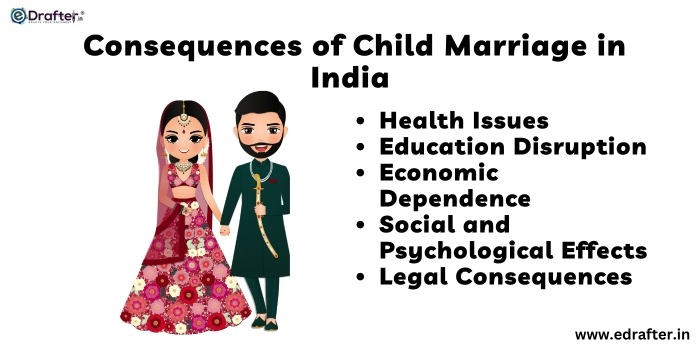
- Health Issues: Young boys and girls forced into early marriages often face severe health risks, including complications during pregnancy, maternal mortality, and malnutrition. The bodies of girls are not fully developed to handle childbirth, leading to high risks of infant and maternal deaths.
- Education Disruption: Early marriage often means the end of education, particularly for girls. Many young brides are forced to drop out of school, limiting their future opportunities and economic independence.
- Economic Dependence: Girls who marry early often become financially dependent on their husbands. This dependency makes them vulnerable to domestic violence and economic exploitation.
- Social and Psychological Effects: Child brides are more likely to experience domestic violence, emotional distress, and mental health issues.
- Legal Consequences: Facilitating child marriage is a punishable offense. Parents, guardians, and priests who arrange or conduct child marriages can face legal action, including imprisonment and fines.
Conclusion
The legal marriage age in India is an essential safeguard to protect young individuals from the negative impacts of early marriage. While the current minimum age for marriage in India is 18 for girls and 21 for boys, there are ongoing discussions about making the age equal for both genders.
Raising awareness about the dangers of early marriage and ensuring strict legal enforcement can help create a society where individuals enter marriage as mature, consenting adults. Ultimately, marriage should be a choice made at the right time, with full awareness and readiness for its responsibilities.