
Table of Contents
Renting out property comes with its own set of responsibilities, for landlord and the tenant. Many times, the landlord wants to sell or reuse the property, or the tenant doesn’t pay rent. Yet, the tenant refuses to vacate. This is where things can get messy if you do not follow the legal route. A legal notice to vacate rental property is the first and most important step for a landlord. It creates a clear record. It also gives the tenant fair warning and time to act. If you are unsure how this works or when it is needed, let’s guide you through it step by step.
Why does a Landlord need to send a Legal Notice to Vacate?
A landlord cannot simply ask a tenant to leave overnight. Even if rent is unpaid or the agreement has expired, the law requires due process. Sending a legal notice to vacate rental property protects the landlord. It formally informs the tenant that they are required to leave the premises within a specified time. It also shows that the landlord has acted lawfully and reasonably. If the matter later goes to court, this notice becomes key evidence. Without it, eviction cases often get delayed or dismissed.
NOTE: To regulate renting out homes and prevent any type of exploitation on the side of renters or property owners, the Rent Control Act was enacted. Even though our country’s states each have their own Acts, they scarcely differ from one another. It makes sure that neither Landlords or Tenants are abusing the rights of the other in any way. Due to the 1948 act’s strict requirements and advantageous treatment of Tenants as well as Landlords.
What are the Top Reasons to Send Legal Notice to Vacate Premises?
There are several valid reasons why a landlord may issue a notice to vacate. Some of them are:
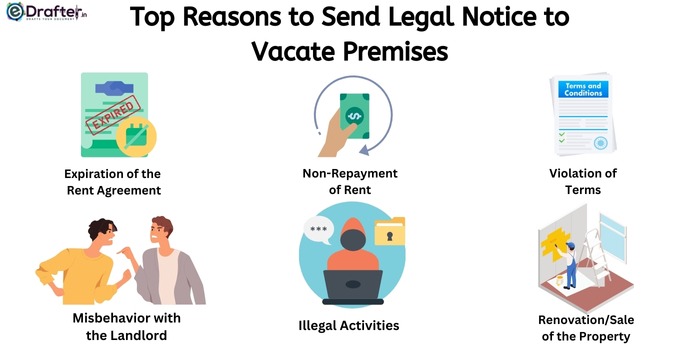
- Expiration of the Rent Agreement: Even after the Rent Agreements tenure is completed, the Tenants are neither vacating the rented property nor renewing the Agreement because in many cases most Tenants re-new their Rent Agreement and continue living. But if the case is different and the Tenant is not ready to vacate then the Landlord can send a Legal Notice to the Tenant to vacate.
- Non-Repayment of Rent: The Tenants who share a good bond with Landlords do sometimes shift their Rent payment month due to which it becomes a habit and at the end Tenants do take advantage of it which later becomes a reason for Landlord sending a Legal Notice to Tenant for not paying rent.
- Violation of Terms in Rent Agreement: If a Tenant neglects to pay rent on time, damages the property, or sublets the property without the Landlord’s consent, the Landlord may send a Legal Notice to the Tenant to vacate.
- Misbehavior with the Landlord: The Landlord may send a Legal Notice to vacate the rental property if the Tenants actions are disruptive or bothersome to other Tenants or neighbors.
- IlLegal Activities taking place: The Landlord may ask a Tenant to vacate if they engage in any kind of ilLegal activities on the property, such as drug use or distribution,etc.
- Renovation/Sale of the Property: The Tenant may be asked to vacate the premises if the Landlord plans to renovate or sell the property but in any case the Tenants are not ready to vacate the property and causing trouble then a Legal Notice to vacate rental property from Landlord can be received by Tenants.
Also Read – Legal Notice Vs Court Notice
What Documents are Required to send an Eviction Notice?
You do not need a large file of paperwork, but some basic documents are essential:
- Rental agreement or lease deed
- Rent receipts or bank statements showing rent payments
- Proof of property ownership such as sale deed or property tax receipt
- Identity proof of the landlord
- Address proof of the rental property
- Notices or warnings already sent to the tenant, if any
- Utility bills of the property, if available
- Any document showing the tenancy relationship or terms of occupation
Your advocate will review these documents before drafting the notice.
How can you Send Legal Notice to vacate Rental Property?
Sending a legal notice through eDrafter is simple and fully online. Here is the step by step guide to send a legal notice:
- You start by visiting eDrafter.in and selecting the legal notice service. This saves you from unnecessary visits and paperwork.
- Next, you share basic details.
- Based on this, you are connected with an experienced advocate.
- You provide all relevant information and documents.
- The advocate drafts a clear legal notice format to vacate rental property based on applicable laws.
- You get the draft for review.
- If any changes are required, they are updated.
- Once approved, the notice is sent to the tenant through legally recognised modes.
What if the Tenant doesn’t Vacate the Property after Sending the Notice?
If the tenant does not vacate even after the notice period ends, the landlord cannot forcefully evict them. Locking the premises or cutting utilities is illegal. The next step is to file an eviction suit before the appropriate court or rent authority. The legal notice to vacate rental property becomes a crucial document in these proceedings. Courts generally favour landlords who have followed due process.
Why Choose eDrafter for Legal Notice?
eDrafter makes the legal process simple and accessible. You do not need to search for lawyers or deal with complex procedures. Experienced advocates handle the drafting. The notice is customised to your situation and follows legal requirements. Everything happens online, saving time and effort. You also get proof of dispatch, which is crucial if the matter goes to court later.
Conclusion
Evicting a tenant is not just about asking them to leave. It is about following the law and protecting your rights as a landlord. A legal notice to vacate rental property is the foundation of a lawful eviction process.
Frequently Asked Questions
How many Days should be given to the Tenant to Vacate the Property?
The notice period depends on the rental agreement and local laws. In most cases, a 15 to 30 day notice is common. If the agreement specifies a notice period, that must be followed. In the absence of a written agreement, courts usually consider 30 days as reasonable time.
Can I Evict the Tenant without a Rental Agreement?
Yes, eviction is possible even without a written rental agreement. Oral tenancy is recognised under Indian law. However, proving the terms becomes harder. Rent receipts, bank transfers, messages, or witness statements help establish the tenancy.
In such cases, sending a legal notice to vacate rental property becomes even more important. It formally records the landlord’s intention and the tenant’s obligation to vacate.