
Table of Contents
A simple denial to leave the rented house by the tenant can be one of the most stressful issues a landlord would be dealing with. What starts as a simple rental arrangement can become a legal issue if the tenant stops cooperating or overstays without permission. In such situations, sending a legal notice to evict a tenant is not just helpful, but rather necessary. It shows that the landlord is serious and willing to take legal steps if required. It also creates a written record, which becomes important if the matter goes to court.
What is a Legal Notice for Eviction of a Tenant?
A legal notice to evict tenant is a formal written communication sent by a landlord asking the tenant to vacate the property within a specific time. It clearly mentions the reason for eviction, details of the tenancy, and the deadline by which the tenant must vacate. This notice is usually drafted by a legal professional to ensure that it follows the correct format and legal requirements.
When Can a Landlord Legally Evict a Tenant in India?
A landlord cannot remove a tenant at will. The eviction must be based on valid legal grounds and must follow proper procedure. A legal notice to evict tenant can be sent when the tenant violates the terms of the rental agreement or applicable laws. Further, if the tenant breaches important conditions of the agreement, the landlord has the right to initiate eviction.
Example: if the lease period has ended and the tenant refuses to leave, the landlord can take action.
Common Reasons for Sending an Eviction Notice to a Tenant
There are several situations where landlords choose to send a legal notice to evict tenant.
- Non-payment of rent for a long period
- Violation of the terms mentioned in the rental agreement
- Using the property for illegal or unauthorised purposes
- Causing damage to the property
- Subletting without permission
- Creating nuisance or disturbance for neighbours
- Refusing to vacate after the lease has expired.
Legal Rights of Landlords in Tenant Eviction Cases
A landlord has the right to send a legal notice to evict tenant and demand that the property be vacated within a reasonable time (e.g., 15-30 days). If the tenant does not comply, the landlord can file a case in court for eviction. The landlord can also claim unpaid rent or damages, depending on the situation and the terms of the agreement.
At the same time, landlords cannot forcefully evict tenants. Actions like changing locks, cutting off utilities, or physically removing the tenant are not legally allowed. This is why sending a legal notice to tenant and following proper legal steps is important.
Important Details to Include in an Eviction Legal Notice
An eviction notice must be clear and complete. Missing details can weaken its impact.
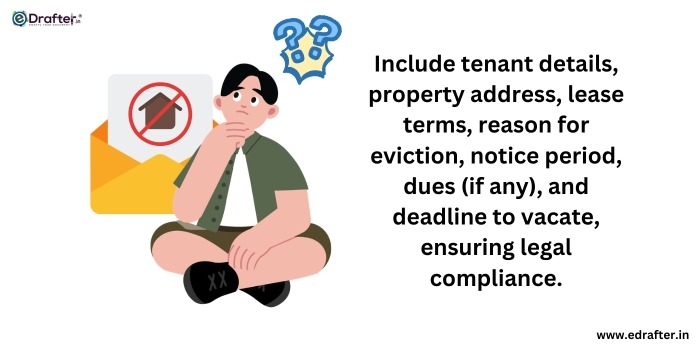
Some important details to include are:
- Name and address of the landlord and tenant
- Complete details of the rented property
- Reference to the rental agreement
- Clear reason for eviction
- Duration of tenancy and relevant dates
- Time period given to vacate the property
- Statement of legal action if the tenant fails to comply
A properly drafted legal notice to evict tenant leaves no room for confusion and strengthens the landlord’s position.
Step-by-Step Process to Draft a Legal Notice for Tenant Eviction
At eDrafter, the process is designed to be simple and efficient.
- Start by visiting the eDrafter website
- Select the legal notice service
- Share basic details about the tenant, property, and issue
- Get connected with an experienced advocate
- Provide all relevant documents and information
- The advocate drafts a legal notice to evict tenant based on applicable laws
- Review the draft and suggest changes, if required
- Once approved, the legal notice to tenant is sent through legally accepted modes
What Happens After Sending a Legal Notice to Evict a Tenant?
After receiving the legal notice to evict tenant, the tenant has a chance to respond.
In many cases, tenants choose to vacate the property within the given time. Some may contact the landlord to settle the issue or ask for more time.
If the tenant ignores the notice, the landlord can proceed with legal action by filing an eviction suit.
The legal notice to tenant then becomes an important document in court. It shows that the landlord gave a fair opportunity before approaching the legal system.
Can a Tenant Be Evicted Without a Legal Notice?
In most situations, evicting a tenant without sending a legal notice is not recommended.
Courts prefer that landlords follow proper procedure. A legal notice to tenant shows that the landlord acted reasonably and gave the tenant time to vacate.
Skipping this step can weaken the case and may lead to delays or complications during legal proceedings.
It is always better to begin the process with a properly drafted legal notice to evict tenant.
Mistakes Landlords Should Avoid While Sending an Eviction Notice
Many landlords make small but important mistakes while sending a legal notice to evict tenant. These mistakes can reduce the effectiveness of the notice.
- Not clearly stating the reason for eviction
- Giving vague or unrealistic timelines
- Not referring to the rental agreement
- Sending informal messages instead of a proper legal notice to tenant
- Missing important details about the property or tenancy
Avoiding these mistakes helps make the notice stronger and increases the chances of resolving the issue quickly.
Role of eDrafter’s Advocate in Preparing a Tenant Eviction Notice
Getting your legal notice written by eDrafter is not just about the words. It is about the structure, demands, expression of situation, and the legal rights being mentioned. At eDrafter, our advocate ensures that the legal notice to evict tenant is drafted correctly and includes all required details. A well-drafted legal notice to tenant reduces the chances of disputes and strengthens the landlord’s position if the matter goes to court. Professional assistance can make a big difference in how effective the notice is.
Conclusion: Taking Legal Action Against a Problematic Tenant
Evicting a tenant can be a difficult situation but handling it the right way makes the process smoother. Sending a legal notice to evict tenant is the first and most important step. It creates a formal record, gives the tenant a chance to respond, and prepares the landlord for further legal action if needed. A clear and properly drafted legal notice to tenant can often resolve the issue without going to court. Even if the matter proceeds legally, it ensures that the landlord’s rights are protected.