Table of Contents
Getting a legal notice from a bank over unpaid credit card dues can feel overwhelming. Maybe you’ve fallen behind on payments, maybe you’ve already paid more than what they’re claiming, or maybe the charges are plain wrong. Whatever the situation, the worst thing you can do is ignore the notice. A legal notice is not just a final warning it’s a chance for you to present your side before the bank escalates the matter to court, arbitration, or recovery proceedings. Whether the amount is disputed, exaggerated, or genuinely owed, replying properly protects your rights. And if the claim is based on a wrong credit card payment, your legal reply becomes even more crucial.
Let’s break down what to do, what to say, and how to respond in a way that legally defends you.
I have received legal notice for credit card payment. What can I do?
Start by reading the notice carefully. Many people panic and push it aside, but this is the stage where you still have full control. Look at the amount being claimed and check whether it aligns with your records. Review past statements, payment receipts, emails from customer care, and any charges you have previously disputed.
Sometimes banks impose hidden fees, auto-debit charges, or interest piling up over time. Sometimes the notice is accurate. Sometimes it’s completely wrong. Either way, you have the right to question it. The important thing is this: do not ignore it.
Can I reply to the legal notice for credit card payment?
Yes, and you absolutely should. A legal reply is your opportunity to correct the bank’s version of events, dispute wrong charges, or request more time. It also shows the bank, the court, or the RBI that you are not absconding, not hiding, and not admitting anything without contest.
Once you reply, the ball is no longer just in their court. You create a written record that you’re aware of the notice, and you’re prepared to defend yourself if required.
What legal actions can I take for wrong credit card payment?
If the notice is based on inaccurate billing, inflated charges, or fraud, the law gives you several options:
1. You can dispute the claim with evidence, write to the bank’s grievance officer, or escalate the issue to the RBI’s Banking Ombudsman.
2. You can also file a complaint in the Consumer Court if the bank has been negligent or unfair.
3. If recovery agents threaten or harass you, that too can be challenged legally.
A properly drafted reply strengthens your position in every one of these situations. It shows that you did not accept the claim and that matters.
What should be included in the legal notice reply for wrong credit card payment?
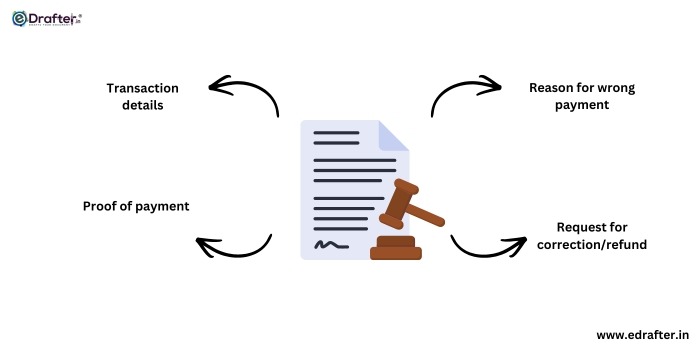
A strong reply is factual, structured, and calm. It should mention the notice you received, your masked credit card number, the details of disputed charges, and proof of any payments already made. If you’ve raised service requests or emails earlier, mention those too they show you tried resolving the issue.
A good reply either clearly denies liability or explains why the amount in question is wrong. If you’re not denying it entirely, you can propose settlement terms, request a corrected statement, or seek time to pay. What matters is that your response is written in proper legal language, leaves no room for misunderstanding, and does not accidentally admit guilt.
How to write a legal notice reply for credit card payment?
Not everyone knows how to draft a legal reply and that’s perfectly normal. That’s where eDrafter helps.
- You start by visiting our “eDrafter.in” website and selecting the Legal Notice Reply service.
- Upload a copy of the notice, add your version of events, and attach any supporting documents. That’s all we need to begin.
- From there, a legal expert reviews your case, drafts a professional reply, and shares it with you for approval.
- Once you’re satisfied, the final reply is sent to the bank or their lawyer through registered post and you get proof of dispatch for your records.
Why a proper legal reply matters?
A professionally drafted reply works in your favour in more ways than one. It presents y-our side clearly and firmly. It includes legal context where necessary. It ensures nothing you write can be twisted against you later. It shows that you are not ignoring the claim, and most importantly, it proves you have formally responded within the time.
Once your reply is on record, the bank can’t say you stayed silent or admitted the charges. And if things escalate, your reply becomes a crucial part of your defence. Compare that with replying on your own. Without proper legal language, you might unintentionally weaken your case. You might write something emotional, vague, or apologetic that can be misread as acceptance of liability. You might leave out important facts. And whatever you send even casually becomes evidence.
When a lawyer writes the reply, the tone changes. It becomes clear that you understand your rights, that you’re not intimidated, and that you’ll defend yourself if needed. The bank knows they can’t push unlawful recovery tactics easily. In some cases, a well-written reply is enough to make banks rethink their next move.
How eDrafter helps in sending a legal notice reply?
With eDrafter, you don’t have to meet a lawyer in person or figure out complicated legal language. The process is simple, accurate, and entirely online. You get professional drafting at an affordable cost, your reply is legally compliant, and you receive dispatch proof without having to visit a post office.
It saves you time, prevents legal missteps, and protects you from aggressive recovery pressure. Whether the amount is disputed, inflated, or partially true, we help you respond correctly, confidently, and on record.
Conclusion
A legal notice for credit card payment in India is serious, but it’s not the end of the road. You have every right to reply, question charges, refuse wrongful claims, and defend yourself. Silence often works against you. A proper legal reply works entirely in your favour. If the bank is right, you can respond and negotiate. If the bank is wrong, you can respond and challenge. But in every case, you must respond.
With eDrafter, you can reply professionally, legally, and without stress and make it clear that you’re not someone who can be pushed into paying what you don’t owe. If you’ve received a legal notice, don’t wait. Get your reply drafted the right way and take back control of the situation.