
Table of Contents
Getting involved in legal disputes can be stressful and tedious. It all starts with receiving a legal notice for the first time. Most people panic, ignore it, or respond emotionally. That’s usually where mistakes begin. A proper reply to a legal notice is important because it helps present your side clearly before the matter escalates further. Whether the notice relates to money recovery, property disputes, employment issues, or family matters, responding correctly can make a significant difference.
What is a Reply to a Legal Notice?
A reply to legal notice is a formal written response sent by the recipient of a legal notice. It addresses the allegations, claims, or demands made by the sender. The purpose is to present your version of facts, deny false allegations if necessary, and protect your legal position. A properly drafted reply to legal notice format helps create a written record of your response before the matter reaches court.
Is it Mandatory to Reply to a Legal Notice in India?
One of the most common questions raised is whether it is essential to provide a response to a legal notice. Legally speaking, not all notices are obligatory to answer. Nonetheless, it is always advised to respond, as it allows you to clarify your stance and ensure that the person sending the notice does not presume it to be true.
Legal Consequences of Not Responding to a Legal Notice?
Not responding to the notice does not necessarily imply that one will lose the case. It may have a negative impact on your position when the matter comes before the court. The other party might say that by not responding, you admit that you have no defences for yourself, which is why knowing how to reply to a legal notice becomes essential.
Why Ignoring a Legal Notice Can Hurt Your Case?
When you ignore a legal notice, it makes others think of you as someone who does not care about their position in any way possible and might result in direct legal action being taken against you without further delay. You have a chance to explain the facts of the matter, refute false statements, and solve the problem.
Can You Reply to a Legal Notice Without a Lawyer?
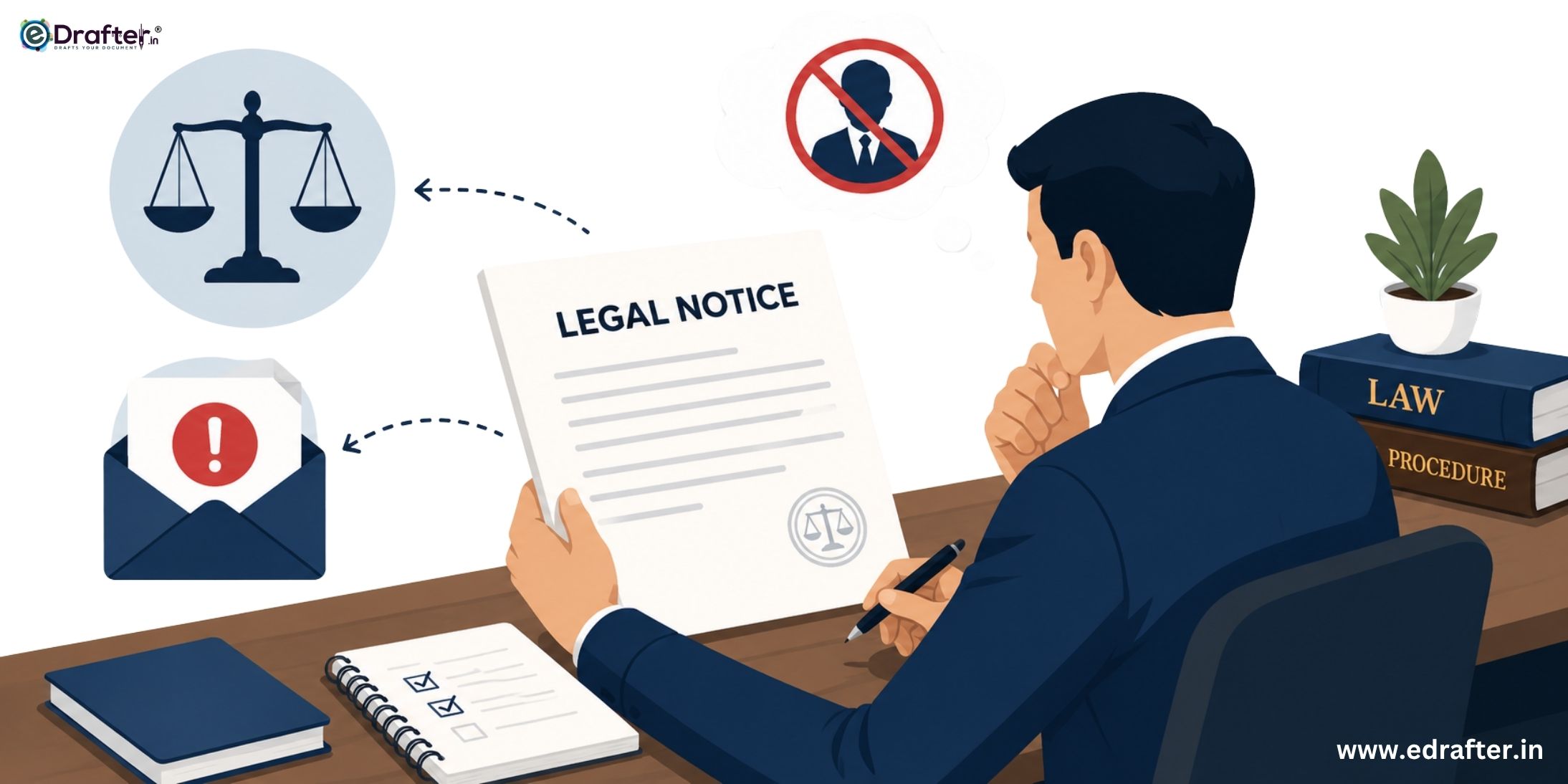
Yes, you can. Many people ask, can I reply to legal notice without lawyer? Legally, there is no restriction on replying yourself. However, legal language, application of laws, and structure matter. A poorly drafted response can unintentionally damage your position. So while you can send a reply yourself, professional drafting is usually safer in serious disputes.
When You Should Consult a Lawyer?
You should consult a lawyer as soon as you receive a legal notice which involved large financial claims, criminal allegations, property disputes, employment termination, or family matters. Legal guidance becomes especially important if the matter is likely to reach court. A lawyer helps ensure your reply stays factual, legally sound, and strategically written.
How to Reply to a Legal Notice- Step-by-Step Process
Step 1: Read the Notice Carefully and Understand the Claims
Start by reading the entire notice calmly. Understand the allegations, demands, timelines, and legal claims being made. Do not rush into replying emotionally.
Step 2: Gather Evidence and Supporting Documents
Collect all documents, agreements, receipts, emails, messages, or records connected to the dispute. These documents help support your version of facts.
Step 3: Draft Your Reply Addressing Each Allegation
Prepare a structured reply addressing every important allegation clearly. A proper reply to legal notice format should stay factual, professional, and legally relevant.
Step 4: Send via Registered Post with Acknowledgement
Once finalized, send the reply through registered post, speed post, or another trackable method. Keeping proof of delivery is important.
Reply to Legal Notice Format
Here is a basic sample reply to legal notice structure:
Date: _______
To,
[Sender Name & Address]
Subject: Reply to Legal Notice Dated _______
Sir/Madam,
Under instructions from my client, I hereby submit the following reply to your legal notice dated _______. The allegations made in the notice are false, incorrect, and denied unless specifically admitted herein. My client states that [brief facts and clarification].
Therefore, your claims are denied, and you are requested to withdraw the notice. Any further legal action shall be contested appropriately.
Regards,
[Your Name]
Common Mistakes to Avoid When Replying to a Legal Notice
Legal notice writing must follow the right structure and format. From format to language, all things must be taken into consideration. Here are some typical errors one should try to avoid:
- The first mistake is to react emotionally rather than legally.
- The second error is to admit any facts without knowing about it when explaining the matter.
- Deadlines may be overlooked by some people.
- One must maintain professionalism in his or her response at all times.
Time Limit to Reply to a Legal Notice in India
There is no set period for all the cases, although most of the time, the notification will allow you to respond between 7 to 30 days. Make sure that your response is always done within the allotted time frame and take into account the particular time of the response stated in the legal notice.
Draft a Professional Reply to Legal Notice Instantly with eDrafter
The answer to the legal notice format needs to be structured properly, using proper language and provisions. An adequate clarification of the facts is also required. For all this under one umbrella, we recommend you use eDrafter. We at eDrafter:
1. Assist you in preparing a professionally structured answer to the legal notice format In easy manner.
2. Helps you draft answers in the proper reply to the legal notice format, ensuring all the vital points have been covered.
3. Helps you in making sure that your answer remains professional as well as legally relevant.
4. Our advocates make sure all the allegations and vital points are adequately answered.
Conclusion
Receiving a legal notice does not automatically mean you are wrong. What matters is how you respond. A properly drafted reply to legal notice helps protect your rights, clarify facts, and prevent unnecessary legal complications. Understanding how to reply legal notice calmly and correctly can make a major difference in how the dispute moves forward.
FAQs
Is it compulsory to reply to a legal notice in India?
No, it is not always legally compulsory, but replying is generally recommended.
What is the time limit to reply to a legal notice?
Most notices provide 7 to 30 days for response, depending on the matter.
Can I reply to a legal notice without a lawyer?
Yes, you can, but legal guidance is advisable in serious disputes.
What happens if I don’t reply to a legal notice?
The sender may proceed with legal action, and your silence may weaken your position later.
Should a reply to a legal notice be sent via registered post?
Yes, registered or speed post with acknowledgement is preferred because it creates proof of delivery.