Table of Contents
Imagine you rent your property to a tenant, and the tenant stops paying you rent for that. What will be your first step? Reminders and calls, right? Even after constant reminders, if you don’t receive the rent, then sending a legal notice to the tenant becomes an important first step.
A legal notice formally informs the tenant that rent has not been paid and asks them to clear the dues within a specific time. It also warns that legal action may follow if the issue is ignored. Sending a legal notice for non-payment of rent helps landlords assert their rights and creates a clear legal record before approaching the court. In this blog, we will understand how this notice can help landlords deal with rent default situations more effectively.
What is a Legal Notice for Non-Payment of Rent?
A legal notice for non-payment of rent is a formal communication sent by a landlord to a tenant who has failed to pay rent as agreed in the rental agreement. It is usually drafted with the help of a lawyer and sent before taking legal action. The notice clearly states the facts, issues the rent amount that is due, the period for which it has not been paid, and the deadline within which the tenant must make the payment. A Legal Notice to Tenant acts as an official warning. It gives the tenant a fair chance to clear the pending rent before the matter turns into a legal dispute.
When Should a Landlord Send a Legal Notice to a Tenant?
A landlord should send a Legal Notice to Tenant when the tenant repeatedly fails to pay rent despite reminders. Most landlords first try to resolve the matter through calls or messages. However, if the tenant keeps delaying the payment or stops responding, sending a legal notice for non-payment of rent becomes necessary.
Some common situations where landlords send a legal notice include when rent has not been paid for several months, when the tenant avoids communication, or when the landlord plans to take legal action for eviction or recovery of rent.
Legal Grounds for Sending Notice to a Tenant in India
In India, landlords can send a legal notice to tenant when the tenant violates the terms of the rental agreement. Non-payment of rent is one of the most common grounds for taking action. When a tenant fails to pay rent within the agreed time, the landlord has the right to issue a legal notice for non-payment of rent. This notice informs the tenant about the breach of agreement and asks them to correct the default. It also allows the tenant to pay the pending rent before the landlord approaches the court.
Important Details to Include in a Rent Default Legal Notice
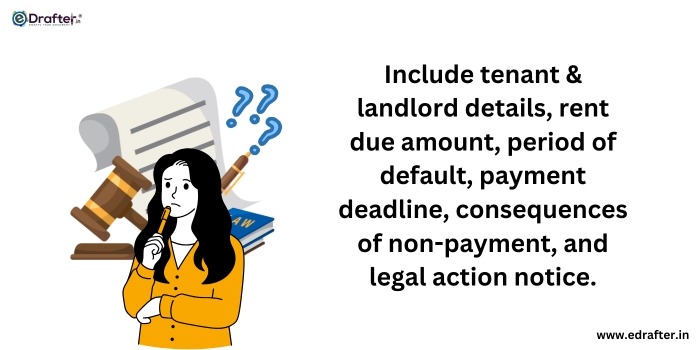
A proper legal notice to tenant must contain clear and accurate information. Missing important details can reduce the effectiveness of the notice. Some key details that should be included are:
- Names and addresses of both the landlord and the tenant
- Complete details of the rented property
- Reference to the rental agreement between the parties
- The total amount of unpaid rent
- Important terms of the rent agreement
- Proof of reminders sent
- The specific period for which the rent is due
- A clear deadline given to the tenant to clear the payment
- A statement that legal action may be taken if the dues are not paid.
Rights of Landlords When a Tenant Stops Paying Rent
When a tenant stops paying rent, the law provides certain protections to landlords. Property owners have the right to recover unpaid rent and take legal action if needed. The landlord can first send a legal notice to tenant asking them to clear the pending rent within a specific time. If the tenant still refuses to pay, the landlord may approach the court for eviction or recovery of dues. Depending on the situation, the landlord may also claim damages or interest on the unpaid rent if such terms exist in the agreement.
Legal Consequences for Tenants Who Fail to Pay Rent
Tenants who ignore their rent obligations may face serious legal consequences. Once a legal notice to tenant is received, the tenant is expected to respond or clear the pending rent. If the tenant fails to do so, the landlord can file a case for eviction and recovery of rent.
In many cases, the court may order the tenant to vacate the property and pay the outstanding rent. Ignoring a legal notice for non-payment of rent can therefore make the situation more difficult for the tenant.
Steps to Draft a Proper Legal Notice for Non-Payment of Rent
Drafting a proper legal notice requires clarity and correct legal wording. At eDrafter, the process is simple.
- Start by visiting eDrafter.in and choosing the legal notice service.
- Next, share the basic details of your issue.
- You are then connected with an experienced advocate.
- Provide the required information and documents.
- The advocate drafts a clear legal notice to vacate the rental property as per the law.
- You receive the draft for review.
- If changes are needed, they are updated.
- Once approved, the notice is sent to the tenant through legally recognised methods.
Common Mistakes to Avoid While Sending a Rent Default Notice
Many landlords make avoidable mistakes while sending a legal notice to tenant. Some common mistakes include:
- not mentioning the exact amount of unpaid rent
- failing to refer to the rental agreement in the notice
- sending informal messages instead of a properly drafted legal notice for non-payment of rent
- not structuring the notice in a legally clear manner
Avoiding these mistakes helps ensure the notice is legally strong and prevents unnecessary complications.
What Happens If the Tenant Ignores the Legal Notice?
If a tenant ignores the legal notice to tenant, the landlord can proceed with legal action. The landlord may file a case for eviction or recovery of unpaid rent in the appropriate court. The legal notice then becomes important evidence showing that the tenant was given a chance to resolve the issue.
How an Advocate Helps in Drafting a Strong Legal Notice?

Although a legal notice may appear simple, the wording used in it is very important. Even small errors can affect its legal value. An advocate understands the legal framework and ensures that the legal notice to the tenant includes all necessary details. They draft the notice carefully and include clear demands and timelines. This makes the legal notice for non-payment of rent more effective and legally reliable.
Send a Legal Notice to a Tenant Easily Through eDrafter
Sending a legal notice can sometimes feel complicated. eDrafter makes the process simple and convenient for landlords.
- eDrafter makes it easy for landlords to send a legal notice without complicated steps.
- The platform connects users with legal professionals who draft the notice based on the situation.
- Landlords can send a legal notice to tenant without dealing with lengthy procedures.
- A properly drafted legal notice for non-payment of rent helps address the issue quickly.
Conclusion: Protect Your Rights as a Landlord
When a tenant stops paying rent, ignoring the problem can lead to bigger issues later. Sending a legal notice to the tenant is an important step that helps landlords formally address the situation. A well-drafted legal notice for non-payment of rent allows the tenant to clear the dues and also prepares the landlord for legal action if necessary. Taking timely action helps protect the landlord’s rights and can often resolve disputes more effectively.